12on12off
  • Home
  • About Us
  • NEWS
  • Video
  • Articles
  • Blog
  • Donate
  • Contact
  • Store

NTSB cites operator fatigue in CTA crash at O'Hare

4/28/2015

 
Picture


NTSB cites operator fatigue, lack of safety equipment in CTA crash at O'Hare
By Jon Hilkevitch
re-posted from Chicago Tribune

A CTA rail operator who fell asleep at the controls and crashed a Blue Line train into the O'Hare station last year did not report to work adequately rested as she juggled different starting times, and the transit agency failed to properly manage her schedule to reduce the risk of fatigue, an investigation by the National Transportation Safety Board concluded Tuesday.

NTSB cites operator fatigue in CTA crash at O'Hare

Citing those factors as the probable cause of the accident on March 24, 2014, the investigation also found that contributing factors included the CTA's failure to provide sufficient speed restrictions and stopping distances in the event of an emergency as a train entered the station.

"The layers of protection designed to prevent such an accident failed," safety board Chairman Christopher Hart said at the opening of an hourlong hearing in Washington. He cited both the train operator dozing off due to severe fatigue and the absence of safety equipment that would have stopped the train safely once the operator failed to obey a red signal.

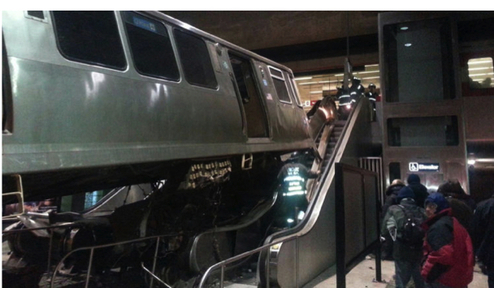
The accident occurred shortly before 3 a.m. when the train overshot the stopping area at the O'Hare International Airport station, smashed through a bumping post at the end of the track and landed atop an escalator, which was unoccupied because of the hour.

The crash injured 33 passengers and caused roughly $9 million in damage.

The CTA fired the operator, Brittney Haywood, a one-year employee who completed training two months before the accident. Haywood, 25, told investigators she dozed off before the crash.

Only a month into the investigation, the safety board said the accident could have been prevented if a sensor that triggers the train's automatic braking system were properly positioned farther away from the end of the track.

The CTA subsequently implemented a series of changes at the O'Hare station and tightened work and rest rules.

The safety board on Tuesday also issued a series of safety recommendations aimed at preventing similar accidents on U.S. transit systems. They included advising the Federal Transit Administration to develop a work schedule program for public transit agencies that incorporates fatigue science and provides predictable work and rest schedules, as well as setting limits on rail operators' hours of service.

Tuesday's NTSB hearing wrapped up a 13-month investigation. In late March, the safety board released more than 1,600 pages of documents, including statements based on an interview with Haywood. She admitted that she also dozed off in February 2014 at the controls of her train at the Blue Line stop at Belmont.



When Work and Sleep Conflict, Work Wins

4/10/2015

 
There are a lot of advantages to earning more money, but getting a good night’s sleep may not be one of them.
- from TheUpshot


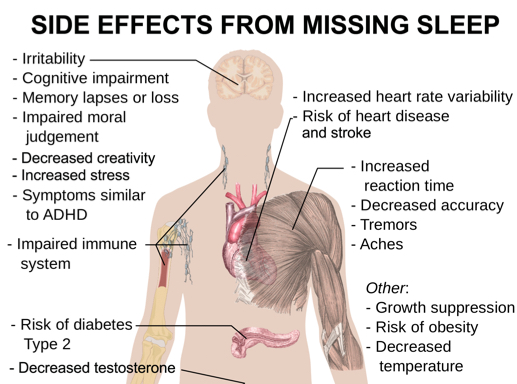
Sleeping too little is really bad for your health. Researchers have demonstrated that, for most people, sleeping less than six hours a night results in cognitive impairment. Poor sleep is also associated with a number of other health problems, and an increased risk of dying in a car accident.

Read More

Drowsy driving

4/3/2015

 
Picture
By Andrea Downing Peck  -   re-printed from The Costco Connection magazine

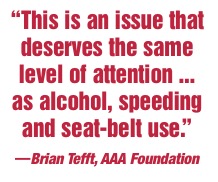
DRUNKEN DRIVING and distracted driving grab headlines, but drowsy driving is potentially an equally lethal combination. More than one in five fatal crashes involve driver fatigue, according to new research from the AAA Foundation for Traffic Safety.

“It’s clearly an under appreciated problem,” says Ameriprise Auto & Home Insurance president Ken Ciak. “The media does a great job highlighting the dangers of drinking and driving, or, lately, texting and driving, but drowsy driving doesn’t get the same attention; therefore, people don’t understand the warning signs or potential repercussions.”


Read More

Sleep deprivation and our teenage children

2/19/2015

 
Study finds a correlation between the sleeping patterns of parents and their teenagers

Sleep deprivation and how it affects us also reflects badly on our teenage children. The February issue of the 
Journal of Adolescent Health states:

Lack of sleep has been linked to obesity, accidents, substance abuse and other health problems during high school, researchers said. Efforts to improve teen sleep should consider the sleep routines of parents and possible other family members.

READ full article from Wall Street Journal


CDC says Insufficient Sleep Is a Public Health Epidemic

2/6/2015

 
Sleep is increasingly recognized as important to public health, with sleep insufficiency linked to motor vehicle crashes, industrial disasters, and medical and other occupational errors.1 Unintentionally falling asleep, nodding off while driving, and having difficulty performing daily tasks because of sleepiness all may contribute to these hazardous outcomes. Persons experiencing sleep insufficiency are also more likely to suffer from chronic diseases such as hypertension, diabetes, depression, and obesity, as well as from cancer, increased mortality, and reduced quality of life and productivity. Sleep insufficiency may be caused by broad scale societal factors such as round-the-clock access to technology and work schedules, but sleep disorders such as insomnia or obstructive sleep apnea also play an important role. An estimated 50-70 million US adults have sleep or wakefulness disorder. Notably, snoring is a major indicator of obstructive sleep apnea.

In recognition of the importance of sleep to the nation's health, CDC surveillance of sleep-related behaviors has increased in recent years. Additionally, the Institute of Medicine encouraged collaboration between CDC and the National Center on Sleep Disorders Research to support development and expansion of adequate surveillance of the U.S. population's sleep patterns and associated outcomes. Two new reports on the prevalence of unhealthy sleep behaviors and self-reported sleep-related difficulties among U.S. adults provide further evidence that insufficient sleep is an important public health concern.

Sleep-Related Unhealthy Behaviors

The Behavioral Risk Factor Surveillance System (BRFSS) survey included a core question regarding perceived insufficient rest or sleep in 2008 (included since 1995 on the Health Related Quality of Life module) and an optional module of four questions on sleep behavior in 2009. Data from the 2009 BRFSS Sleep module were used to assess the prevalence of unhealthy/sleep behaviors by selected sociodemographic factors and geographic variations in 12 states. The analysis determined that, among 74,571 adult respondents in 12 states, 35.3% reported <7 hours of sleep during a typical 24-hour period, 48.0% reported snoring, 37.9% reported unintentionally falling asleep during the day at least once in the preceding month, and 4.7% reported nodding off or falling asleep while driving at least once in the preceding month. This is the first CDC surveillance report to include estimates of drowsy driving and unintentionally falling asleep during the day. The National Department of Transportation estimates drowsy driving to be responsible for 1,550 fatalities and 40,000 nonfatal injuries annually in the United States.

Self-reported Sleep-related Difficulties Among Adults

The National Health and Nutrition Examination Survey (NHANES) introduced the Sleep Disorders Questionnaire in 2005 for participants 16 years of age and older. This analysis was conducted using data from the last two survey cycles (2005–2006 and 2007–2008) to include 10,896 respondents aged ≥20 years. A short sleep duration was found to be more common among adults ages 20–39 years (37.0%) or 40–59 years (40.3%) than among adults aged ≥60 years (32.0%), and among non-Hispanic blacks (53.0%) compared to non-Hispanic whites (34.5%), Mexican-Americans (35.2%), or those of other race/ethnicity (41.7%). Adults who reported sleeping less than the recommended 7–9 hours per night were more likely to have difficulty performing many daily tasks.

How Much Sleep Do We Need? And How Much Sleep Are We Getting?

How much sleep we need varies between individuals but generally changes as we age. The National Institutes of Health suggests that school-age children need at least 10 hours of sleep daily, teens need 9-105 hours, and adults need 7-8 hours. According to data from the National Health Interview Survey, nearly 30% of adults reported an average of ≤6 hours of sleep per day in 2005-2007.3 In 2009, only 31% of high school students reported getting at least 8 hours of sleep on an average school night.

Sleep Hygiene Tips

The promotion of good sleep habits and regular sleep is known as sleep hygiene. The following sleep hygiene tips can be used to improve sleep.

• Go to bed at the same time each night and rise at the same time each morning.

• Avoid large meals before bedtime.

• Avoid caffeine and alcohol close to bedtime.

• Avoid nicotine.

(Sleep Hygiene Tips adapted from the National Sleep Foundation)

Sleep Deprivation Is Killing You and Your Career

12/3/2014

 
Picture
by Travis Bradberry, Ph.D.

The next time you tell yourself that you'll sleep when you're dead, realize that you're making a decision that can make that day come much sooner. Pushing late into the night is a health and productivity killer.

According to the Division of Sleep Medicine at the Harvard Medical School, the short-term productivity gains from skipping sleep to work are quickly washed away by the detrimental effects of sleep deprivation on your mood, ability to focus, and access to higher-level brain functions for days to come. The negative effects of sleep deprivation are so great that people who are drunk outperform those lacking sleep.


Read More

The Frightening Connection Between Lack Of Sleep And A Shrinking Brain

9/5/2014

 
The Frightening Connection Between Lack Of Sleep And A Shrinking Brain
from Huffington Post Healthy Living
Anna Almendrala


While all of our brains get smaller as we get older, a startling new study shows that the amount of sleep we get -- or the lack thereof -- could affect how fast they shrink, particularly in people over 60 years old.

“We found that sleep difficulties (for example, trouble falling asleep, waking up during the night, or waking up too early) were associated with an increased rate of decline in brain volume over 3 [to] 5 years,” lead researcher Claire Sexton, DPhil, with the University of Oxford, wrote in an email to The Huffington Post. "Many factors have previously been linked with the rate of change in brain volume over time -- including physical activity, blood pressure and cholesterol levels. Our study indicates that sleep is also an important factor."

The study, published Wednesday in the journal Neurology, is an associative one, which means it doesn’t show whether sleep causes rapid brain shrinkage or if a rapidly shrinking brain results in poorer sleep. Still, Sexton said future research based on her findings could encourage people to take their sleep schedule more seriously.

"In [the] future, we would like to investigate whether improving sleep can help slow decline in brain volume," wrote Sexton. "If so, this could be an important way to improve brain health."

For the study, Sexton evaluated 147 adults between 20 and 84 years old. They all underwent two MRI brain scans an average of 3.5 years apart. They also answered a survey about their sleep quality.

Among the participants, 35 percent had poor sleep quality (which considers factors like how long it takes to fall asleep at night or sleeping pill use, among other things). Sexton found that their brain scans showed a more rapid decrease in the frontal, temporal and parietal parts of the brain.

The frontal lobe regulates decision-making, emotions and movement, while the parietal lobe is where letters and words combine into thoughts, according to the National Institutes of Health. Meanwhile, the temporal lobe is associated with memory and learning.

Sexton's research echoes other recent studies on sleep and the aging brain. A study from a group of scientists from Duke-NUS Graduate Medical School Singapore was published last July that found people who slept fewer hours had brains that aged faster than the controls (in this study, it was demonstrated with brain ventricle enlargement, which is a marker for cognitive decline). Another study, from Beth Israel Deaconess Medical Center in New York, found that the decline of a certain cluster of neurons was associated with higher rates of disrupted sleep in adults over 65. The effect was even more pronounced in study participants with Alzheimer's disease.

Louis Ptacek, M.D., a neurology professor and sleep expert at UC San Francisco, praised Sexton’s “reasonable” and “sound” study for controlling for factors like BMI and physical activity, which are known to affect sleep habits. But he also said the study’s findings, while interesting, are not surprising.

"We know, for example, that in many neurodegenerative diseases, you get all kinds of sleep problems,” Ptacek told HuffPost. "It’s not 100 percent uniform, but we know that Alzheimer’s patients, dementia patients and Parkinson’s patients all have different kinds of sleep phenotypes.”

It's not surprising that bad sleep is associated with decreased size or increased atrophy in different parts of the brain -- "in fact, I would have predicted that," Ptacek said. "But of course, these investigators did the study and proved it."

Ptacek hopes that as more research on the importance of sleep emerges, the public will begin to prioritize sleep seriously as another aspect of health, as opposed to thinking of it as an inconvenience or something to shortchange. We still have a long way to go, both in recognizing how vital sleep is to well-being and in funding more research on the mechanisms of sleep, he said.

“We all spend a third of our lives doing it, and yet, the understanding of the importance of good quality sleep to our health is sort of where tobacco and smoking was 40 years ago,” said Ptacek. " We know almost nothing about sleep at a basic mechanistic level: What is sleep really, and why do we do it?”

Even in 2014, "no one has any idea about the answers to these questions," he said.


Injuries and death in the film and television industry

7/30/2014

 
Injuries and death that have occured as a direct result of unsafe work conditions in the film and television industry including LONG HOURS.

Created by RefuseForSarah on Jun 29, 2014

Film & TV crew Deaths and Injuries. on Dipity.

Sleepless in Hollywood: A Threat to Health and Safety

7/19/2014

 
Picture
Picture
Haskell Wexler's post to The Huffington Post on March 29th, 2012

Tonight or early tomorrow morning in the Los Angeles area, hundreds of sleep-deprived film workers will be driving home after work in a state equivalent to legal drunkenness. Their unnecessary fatigue threatens their health and safety and the community at large.

When you hear the word "Hollywood" it's easy to think of the so-called rich and famous, the ones on Entertainment Tonight. But in fact most of the people who make up the film industry -- the cameramen and gaffers and editors and all the others -- are not "celebrities." The vast majority are the people behind the scenes -- the ones who routinely work 70+ hour weeks. These long hours are the industry standard -- scheduled and on the call sheet. If someone balks at that overload, there are 20 others standing by ready take the job.

Fifteen years ago this month, Brent Hershman, an assistant cameraman on the film Pleasantville, drove home after working a 19-hour day. Exhausted, he fell asleep at the wheel and crashed his car. He was killed. Brent's preventable death led me to begin my documentary Who Needs Sleep? which I finished in 2006.

Since his death, Brent's crew and friends have lobbied the film industry to "limit our workday to 14 hours, beginning at the call and ending when the last person is wrapped," saying that "the workforce in our industry has persevered for too long without such a vital safety guideline in place."

I've tried to carry on their message. On the Internet and with my camera in Washington, D.C., I have been calling attention to the fact that working long hours takes a toll on our health, safety, and family lives.

The medical evidence on sleep deprivation is alarming.

In Who Needs Sleep, Dr. William Dement, a psychiatrist at Stanford University School of Medicine, warns that sleep deprivation and long hours form a lethal combination. Sleep deprivation has been linked to high blood pressure, obesity, cognitive and mood changes, and heart disease.

Col. Gregory Belenky, M.D. of the Walter Reed Army Institute of Research, was assigned to find ways to keep soldiers awake. Because of the extensive resources of the military, he was able to discover compelling evidence demonstrating how critical sleep is to health and safety. In the film, he shows us an example of sleep-deprived pilots who crashed their plane because of their diminished cognitive abilities due to lack of sleep.

But government regulators seem afraid or unwilling to confront Hollywood, and they have fallen short on protecting workers' hours in our industry. The Occupational Safety and Health Administration (OSHA) is chartered "to help workers come home alive and healthy at the end of the day." But OSHA tries to dodge the issue -- they've told me that perhaps we should take it up with our union, or with the employer.

We wouldn't want the Food and Drug Administration to let supermarkets sell rotten meat, yet somehow grossly overtired workers are asked to operate machinery on movie sets and public highways, where nearly one in five fatalities is related to drowsy driving. That's the fault of government regulators. When OSHA ignores its charter and fails to oversee safety, the agency leaves the well being of workers and the public to market forces. That allows producers to take the cheapest way out. Long hours and disregard for the human need for sleep is a case of corporate values outweighing human values.

But nothing has changed in our industry. Long hours are still as routine as when Brent was killed. Back-to-back 16+ hour days are still routine. We work late on Fridays deep into Saturday -- it's what we call the Lost Weekend.

There's nothing I love more than making films. But the health of my fellow film workers and citizens is more important than anything on the silver screen. Long hours can be an acceptable part of our work, but repeated excessively-long shifts and short turnaround times that leave us chronically sleep deprived are not.

This is about our lives and the threat to public safety. The National Highway Traffic Safety Administration paints a dark picture of tired and distracted driving deaths, citing texting, emailing, surfing the Web, eating meals. In accident reports, police check for alcohol and drugs -- and now they include "asleep at the wheel" as a cause. People who sleep six to seven hours a night are twice as likely to be involved in such a crash as those sleeping 8 hours or more, while people sleeping less than 5 hours increased their risk four to five times, according to a AAA report.

To stay awake on a late-night set, we down gallons of coffee and Red Bull -- or reach for the medicine cabinet. Common pills are Vivarin, NoDoz, Stay Alert, and Provigil. With quick turnaround time, we are obliged to shortchange our families and ourselves. Sleeping fast requires help: Alluna, Lunesta, or Ambien are common among the sleep deprived.

There's a line in Who Needs Sleep that goes like this: "the only thing we own is our time." Dr. Eve Van Cauter points out that "sleep deprivation is unique to the human. There is no other animal that sleep-deprives itself." Stretched thin, on little sleep at our jobs, I wonder if we really own our time anymore.

While making Who Needs Sleep, I was driving home after 14 hours of work. I knew I was tired, but I opened the windows and played the radio, confident I stay keep awake. But sometimes you can't will yourself to stay up if you're overtired. The lights went out. My beautiful '87 El Camino was totaled. Hanging upside down by my seatbelt, I could hear the paramedics ask each other, "You think he's alive?"

During the course of making my documentary, there were three deaths. One of them was my friend Conrad Hall, the Oscar-winning cinematographer. From the hospital, he gave Roger Deakins, a mutual friend and cinematographer, and me a statement that he wanted to make public:

"As Directors of Photography, our responsibility is to the visual image of the film as well as the well-being of our crew. The continuing and expanding practice of working extreme hours can compromise both the quality of our work and the health and safety of others."

He knew I was making the film, and he urged me to finish it and to get it out.

That's what led me to form 12 On 12 Off, a nonprofit organization aimed at raising awareness of the lives of film workers and the risks of long hours and sleep deprivation. Our credo begins: "As individuals, we believe every human being working in the film industry has a right to enjoy a life outside of their work, including family, friendships, and sleep."

As I write this, I believe I am honoring Conrad's pledge, which is now mine.

Haskell Wexler is an Academy Award-winning cinematographer (Who's Afraid of Virginia Woolf; Bound for Glory) and director of the groundbreaking film Medium Cool. For more information on workers' hours in the film industry, go to his blog at 12 On 12 Off. He's working on a variety of film projects and was recently shooting on location in Northern California on the Yurok Indian reservation on Kevin McKiernan's new film, Line in the Sand. 

Microsleep

7/2/2014

 
SLEEP DEPRIVATION CAN KILL:

What this story is really about, is sleep deprivation and fatigue. Some commenters in the news stories have taken a "blame the victim" attitude. There are comments to the effect that people ought to know better than to drive when there is danger of falling asleep, and that Beth Jasper was responsible for her own death. Aside from being cruel to the point of sociopathy, most of those types of comments ignore what we know about the science of sleep, as well as the manner in which people make decisions.

First of all, sleep deprivation is cumulative. Miss one or two hours of sleep a few days in a row, and you cannot make it up by one really good night of sleep. In fact, studies have shown it may take longer to recover from several days of sleep deprivation than the total amount of sleep lost in the first place.

For those who expect people to have insight into when they are driving sleepy, I have news. There is a phenomenon called microsleep. It means dozing off for a few seconds at a time, without even being aware of the sleep. Several news programs have done stories on microsleep. Reporters who were filmed dozing off for a few seconds at a time, some while driving, were both startled and frightened at how quickly and easily micorosleep happens. Most of all, how frequently. The video above is a story done by an ABC reporter for Nightline.


<<Previous
Forward>>

    12on/12off

    Archives

    December 2016
    December 2015
    August 2015
    July 2015
    June 2015
    May 2015
    April 2015
    February 2015
    December 2014
    September 2014
    July 2014
    May 2014
    March 2014
    January 2014
    July 2013
    June 2013

    Categories

    All

    RSS Feed